Chinese Delegation Visits LCCI to Boost Bilateral Trade Cooperation
 By hanif sabir
Published: 04 Nov 2026
5 min read
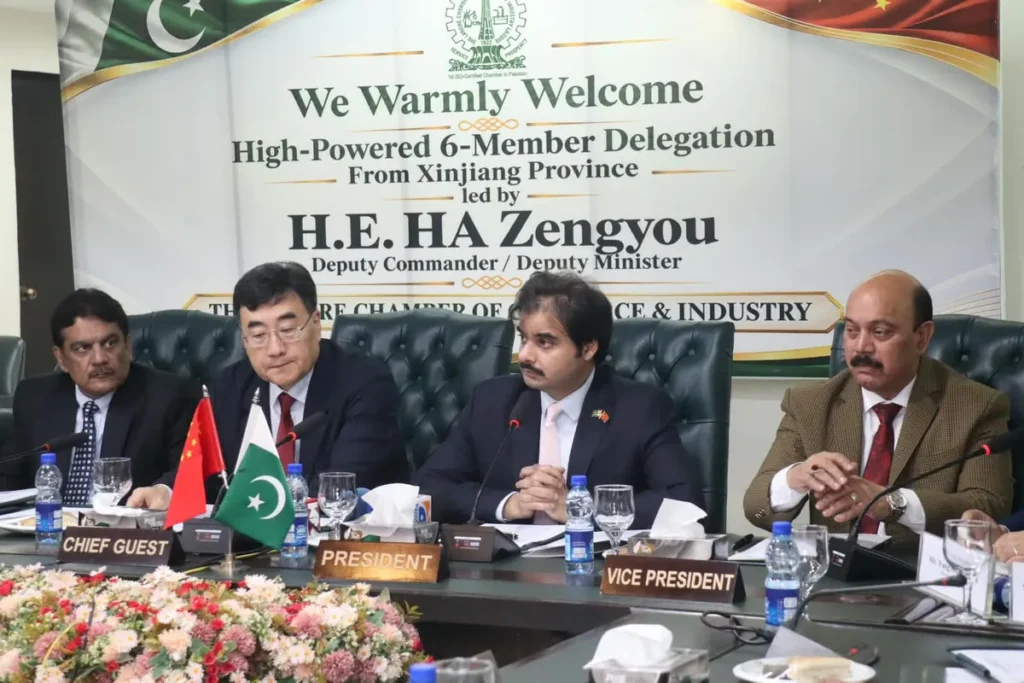
LAHORE (Special Correspondent) – On 4 November 2026, Pakistan and China’s Xinjiang Province set out to explore wide-ranging opportunities to strengthen bilateral trade, investment, and industrial cooperation, with a particular focus on agriculture, textiles, food processing, livestock, technology transfer, cross-border e-commerce, hospitality, tourism, and regional connectivity.
Key Points
- A high-level Chinese delegation visited the Lahore Chamber of Commerce and Industry on 4 November 2026.
- Delegation leader Ha Zengyou proposed a four-pronged framework prioritizing agriculture, textiles, trade channels, and infrastructure.
- LCCI President Ali Hussam Asghar invited Chinese investors to explore Punjab’s CPEC Special Economic Zones.
- Senior Vice President Sardar Usman Ghani proposed establishing a dedicated Chinatown in Lahore for Chinese investors.
- Former LCCI President Shahzad Ali Malik noted that Pakistan’s cotton production had dropped to 5 to 6 million bales.
Expanding Economic Ties Between Pakistan and Xinjiang
These views were expressed by Leader of the Chinese Delegation Ha Zengyou while speaking at the Lahore Chamber of Commerce and Industry (LCCI). LCCI President Ali Hussam Asghar presented the address of welcome while Minister Counsellor at the Embassy of China Yang Guangyuan, LCCI Senior Vice President Sardar Usman Ghani, Vice President Chaudhry Khadim Hussain, and former LCCI President Shahzad also spoke on the occasion.
Yang Guangyuan, Minister Counsellor at the Embassy of China, and other distinguished Chinese delegates also attended the meeting, along with LCCI Vice President Chaudhry Khadim Hussain, former LCCI President Sarwar Malik, former Senior Vice President Zeeshan Khalil, and Executive Committee members Sheikh Muhammad Ibrahim, Sahir Mushtaq, Adeel Babar Khan, Muhammad Umer Abdullah, Naila Nadeem, Shahzad Mahmood, Zulfiqar Ali Chaudhry, Muhammad Ijaz Ghouri, Tariq Mahmood and Ali Raza, among others. Mr. He Haitao, a university teacher from Hong Kong, was also welcomed at the gathering.
Four-Pronged Framework for Industrial Cooperation
Leader of the Chinese Delegation Ha Zengyou said that government-level agreements could achieve their full potential only when entrepreneurs and businesses came forward to translate them into economically viable projects. He said the Xinjiang Production and Construction Corps (XPCC) and Lahore had complementary industrial strengths and supply chains, offering considerable potential for cooperation in agriculture, textiles, manufacturing, trade, and infrastructure.
Presenting a four-pronged framework for cooperation, he identified agriculture and food processing, textiles, new trade channels, and connectivity and infrastructure as priority areas. He said that in agriculture, Pakistan had strong potential in fruits, vegetables, seafood, berries, nuts, and other agricultural products, while XPCC possessed expertise in standardized cultivation, livestock raising, agricultural processing, cold-chain storage, and export-oriented supply chains.
On textiles, he said Pakistan had considerable strengths in cotton spinning and weaving, while XPCC possessed an integrated textile industry, downstream processing capacity, and an experienced workforce. Offering support to the Lahore Chamber and business community, he said XPCC could facilitate businesses in understanding Chinese policies, customs procedures, and taxation matters.
LCCI President Stresses Joint Ventures and Investment
LCCI President Ali Hussam Asghar said Pakistan and China enjoyed a longstanding, time-tested friendship that needed to be translated into stronger business partnerships, investment, and practical economic cooperation. For further insights on international economic partnerships, read more about Pakistan and Türkiye trade and investment talks to understand regional cooperation frameworks. He noted that the visiting delegation represented sectors including textiles, agriculture, livestock, poultry, food processing, and irrigation, all of which offered significant opportunities for collaboration.
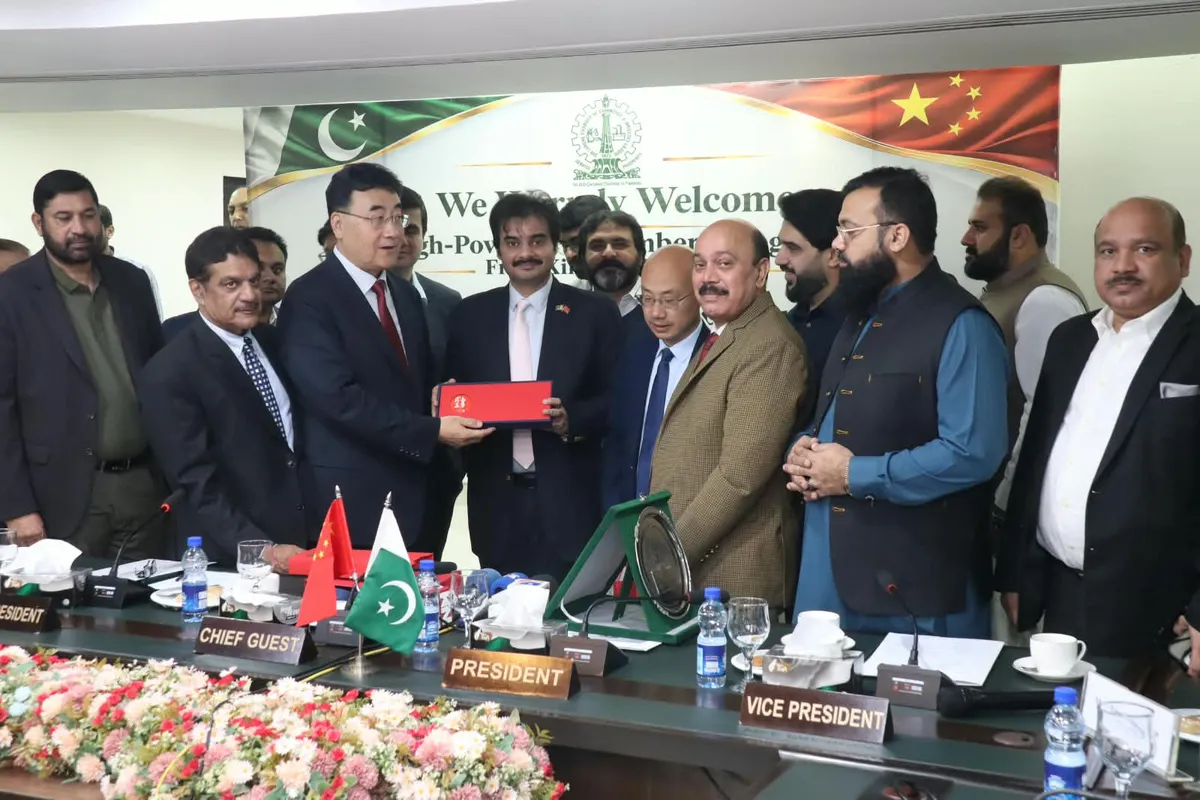
He said that Punjab is the country’s agricultural heartland and an important textile center, while highlighting Xinjiang’s experience in cotton production, modern irrigation systems, agricultural mechanization, and livestock development. The LCCI President identified water-efficient farming, improved cotton productivity, food processing, packaging, cold-chain facilities, and halal meat production as promising areas for joint ventures and technology-based cooperation.
The LCCI President also invited Chinese investors to explore opportunities in Punjab’s industrial infrastructure, industrial estates, and CPEC Special Economic Zones, highlighting the province’s skilled workforce and access to important regional markets.
Proposals for Chinatown and Cotton Revitalization
LCCI Senior Vice President Sardar Usman Ghani said that Lahore’s strategic location, developed transport network, and access to major trade routes connecting western, eastern, and southern markets made it an attractive destination for international investors. In a significant proposal, Sardar Usman Ghani suggested establishing a Chinatown in Lahore where Chinese nationals, professionals, and investors could live and work in a dedicated community environment supported by appropriate security arrangements and necessary facilities.
Former LCCI President Shahzad Ali Malik highlighted the strategic importance of cotton for Pakistan’s agricultural economy and textile industry, stressing the need to benefit from China’s expertise in cotton cultivation, seed development, crop management, and modern irrigation technologies. He referred to ongoing collaboration with China’s Jinghua Seed Industry Company in seed production and variety improvement, expressing hope that similar cooperation with XPCC could help increase cotton yields.
He pointed out that Pakistan’s annual cotton production, which had historically reached around 15 million bales, had declined to approximately 5 to 6 million bales, forcing the country to import cotton from markets such as the United States and Brazil to meet the requirements of its textile industry.
Frequently Asked Questions
What are the priority areas identified for cooperation between Lahore and XPCC?
The priority areas include agriculture and food processing, textiles, new trade channels, and connectivity and infrastructure.
What specific proposal was made by LCCI Senior Vice President Sardar Usman Ghani?
He suggested establishing a Chinatown in Lahore to provide a dedicated community environment with appropriate security and facilities for Chinese nationals and investors.
Why is Pakistan currently importing cotton from international markets?
Pakistan’s annual cotton production has declined from a historical 15 million bales to approximately 5 to 6 million bales, necessitating imports from the United States and Brazil.