Senate Chairman Gillani Vows Stakeholder Consultation for Business Lawmaking
 By hanif sabir
Published: 06 Nov 2026
3 min read

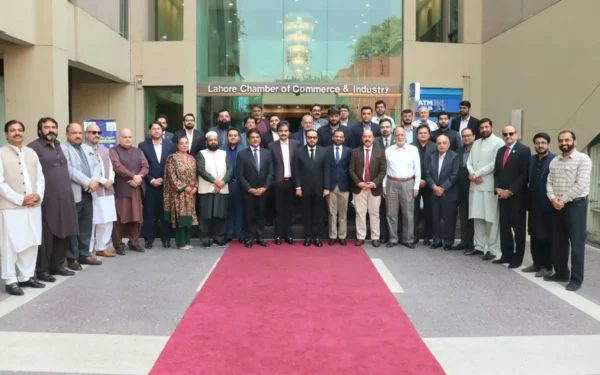
LAHORE (Special Correspondent) – Chairman Senate Syed Yousaf Raza Gillani has confirmed that the business community will be provided a formal platform to present its views and recommendations to relevant Senate standing committees, emphasizing that effective economic policymaking requires meaningful consultation with stakeholders. Addressing an assembly at the Lahore Chamber of Commerce and Industry (LCCI), Gillani highlighted that taxation, regulatory challenges, and the rising cost of doing business are critical concerns that demand structural attention from the legislative branch.
Key Points
- Chairman Senate Syed Yousaf Raza Gillani pledged that the business community will participate in Senate standing committee deliberations on finance and trade.
- LCCI President Ali Hussam Asghar proposed that the chamber leadership should serve as ex-officio members of Senate economic standing committees.
- The business community expressed concern over the impact of aggressive regulatory enforcement and inspections on industrial and commercial operations.
- LCCI has prepared legislative amendments regarding the Punjab Enforcement and Regulatory Authority (PERA) and other regulatory bodies to improve the ease of doing business.
- MNA Syed Ali Qasim Gillani offered support for legislative cooperation, noting past success in addressing anomalies within the Trade Organizations Act.
Strengthening Economic Policy Through Legislative Oversight
Gillani underscored the role of the Senate as the House of Federation, noting that its oversight functions offer an institutional platform to examine national economic challenges. He encouraged the LCCI to maintain active engagement with parliamentary institutions, stating that the chamber’s practical experience and sector-specific insights are essential for robust legislative deliberation. The Chairman noted that when the industrial sector thrives, it creates employment and strengthens the national economy.
Addressing Regulatory Harassment and Compliance
LCCI President Ali Hussam Asghar drew the Chairman Senate’s attention to the growing apprehension within the business community regarding raids, inspections, and arrests under various regulatory frameworks. Asghar clarified that while the chamber supports the rule of law, enforcement should prioritize corrective measures, financial penalties, and education rather than immediate arrests. He highlighted that the chamber has already completed detailed consultations on laws related to the Environmental Protection Agency and the Punjab Food Authority, with formal proposals now submitted to the Speaker of the Punjab Assembly.

Developing Regional Economic Strategies
LCCI Senior Vice President Sardar Usman Ghani advocated for a decentralized approach to economic development, arguing that policies formulated centrally in Islamabad often fail to account for the specific needs of diverse districts. He emphasized that strengthening local governments is crucial for regional growth. Meanwhile, MNA Syed Ali Qasim Gillani noted his commitment to assisting the business sector, citing his role in correcting legislative anomalies that had previously reduced the tenure of trade association office-bearers. Former LCCI President Mian Misbah ur Rehman further suggested that executive members should be invited to observe Senate proceedings to better align with the legislative process, echoing the call for deeper integration between the private sector and government policymakers.
Frequently Asked Questions
What specific proposals did the LCCI make to the Chairman Senate?
The LCCI President proposed that the LCCI President be made an ex-officio member of Senate economic standing committees and requested a special review committee to assess the impact of existing laws on trade and industry.
How does the business community suggest handling regulatory violations?
The LCCI leadership suggested that regulatory violations should be addressed through financial penalties, education, and corrective measures rather than immediate FIRs and arrests.



Comments (1)