ACCA Research Highlights Asia Pacific Sustainability Reporting and Resilience
 By hanif sabir
Published: 04 Nov 2026
4 min read
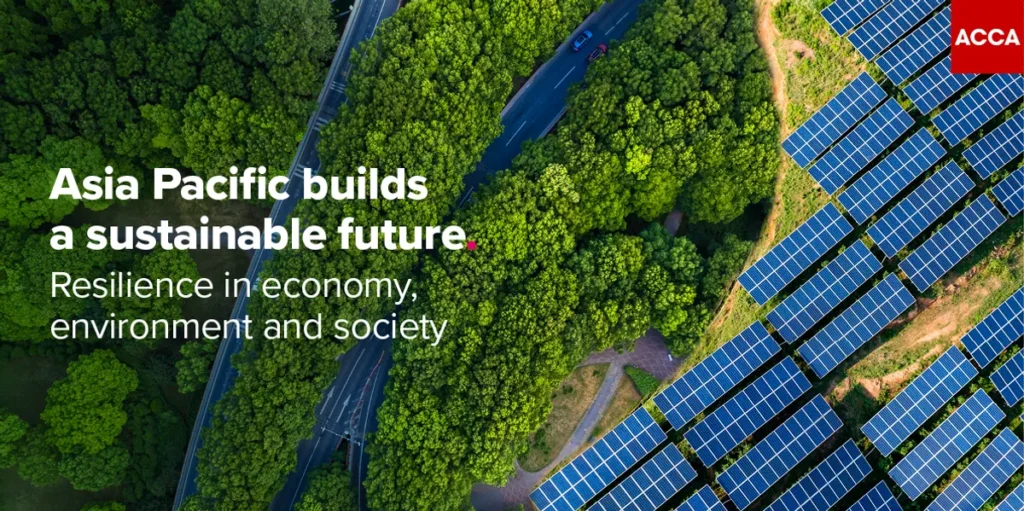
ISLAMABAD (Special Correspondent) – Asia Pacific is leading the global adoption of sustainability reporting standards, but businesses and policymakers must move beyond regulatory compliance and translate sustainability commitments into economic resilience, investment and long-term business value, according to new research by ACCA (the Association of Chartered Certified Accountants). Pakistan’s growing solar capacity, climate vulnerabilities and transition towards sustainable energy underline the urgent need for investment, stronger financial disclosures and climate-resilient business practices.
Key Points
- Asia Pacific leads global sustainability reporting, with adopted economies representing US$60 trillion or 47 percent of global GDP.
- Pakistan recorded economic growth of 3.65 percent in FY2025-26 with installed electricity capacity reaching 49,651MW.
- Distributed solar net metering capacity in Pakistan has expanded significantly to reach 7,319MW.
- Decarbonisation and sustainable practices are essential to manage fossil-fuel price volatility and supply-chain risks.
- Unaddressed water and heat risks could reduce lower-income countries GDP by 10 to 15 percent by 2050.
Economic Growth and Renewable Energy in Pakistan
The findings carry particular relevance for Pakistan, where economic recovery and the energy transition are increasingly linked to climate resilience and sustainable investment. Pakistan’s economy recorded growth of 3.65% in FY2025-26, according to updated national accounts estimates. Meanwhile, installed electricity generation capacity reached 49,651MW, including 7,319MW from solar net metering, reflecting the growing role of distributed renewable energy. You can explore bilateral economic developments by reading about how LCCI Calls For Enhanced Economic Cooperation Between Pakistan And UAE to understand broader trade patterns.
However, the transition presents significant challenges, including financing constraints, grid integration, energy storage, project bankability and the need for stronger institutional capacity. Pakistan also remains highly exposed to climate-related risks, including floods, extreme heat, water stress and glacial melt, with implications for agriculture, infrastructure, livelihoods and economic stability. ACCA research shows that more than 80% of ASEAN economies, measured by GDP, have adopted or plan to adopt standards issued by the International Sustainability Standards Board (ISSB).
Strategic Priorities for Decarbonisation
The ACCA report emphasises that decarbonisation is not simply about reducing carbon emissions. It is also essential for energy security and economic resilience, helping businesses and governments manage fossil-fuel price volatility, geopolitical disruptions and supply-chain risks. Renewable energy generation and storage therefore need to be treated as strategic economic priorities, supported by investment and financing mechanisms that make projects commercially viable. To foster further industrial growth and sustainable trade, stakeholders often look at regional integration, similar to how the FPCCI Urges ASEAN Visa Sticker and Direct Flights for Growth.
Sharath Martin, Senior Policy Consultant, ACCA Asia Pacific, stated that the narrative needs to change from mere disclosures to making businesses more resilient. He noted that decarbonisation cuts emissions while protecting businesses and economies from fossil fuel price volatility, rising costs and supply shocks. The report also highlights the growing importance of sustainability disclosures in attracting investment and maintaining access to international markets. Pakistan has taken steps in this direction through the Securities and Exchange Commission of Pakistan’s phased adoption of IFRS Sustainability Disclosure Standards and its subsequent ESG disclosure guidelines.
Water Risks and Corporate Strategy
Water and extreme heat are identified as potentially defining economic risks of this century. The report notes that, if left unaddressed, water and heat-related risks could reduce GDP by 10–15% in lower-income countries by 2050. Floods alone accounted for more than half of the 7.2 billion people affected by disasters across Asia Pacific between 1970 and 2024. Helen Brand OBE, Chief Executive of ACCA, said the region was building the architecture of sustainability reporting faster than anywhere else, but adopting standards was not the same as achieving decarbonisation or addressing wider sustainability challenges. Businesses are called upon to integrate climate and nature-related risks into corporate strategy, budgets and investment decisions, while policymakers must mobilise capital, strengthen reporting and assurance capacity, and accelerate renewable energy investment. Parallel discussions on bilateral ties, such as when Pakistan and Türkiye Ministers Discuss Expanding Trade and Investment Ties, also emphasize the importance of sustainable economic frameworks.
Frequently Asked Questions
What percentage of global GDP is represented by economies adopting ISSB standards?
Economies that have adopted standards issued by the International Sustainability Standards Board represent approximately US$60 trillion, or 47% of global GDP.
What is Pakistan total installed electricity generation capacity and solar contribution?
Pakistan’s installed electricity generation capacity reached 49,651MW, which includes 7,319MW generated from solar net metering.
What economic impact could water and heat-related risks have by 2050?
Unaddressed water and heat-related risks could potentially reduce GDP by 10 to 15 percent in lower-income countries by 2050.