Global Data Centre Power Demand Expected to Double by 2030
 By hanif sabir
Published: 29 Jul 2026
2 min read
By hanif sabir
Published: 29 Jul 2026
2 min read
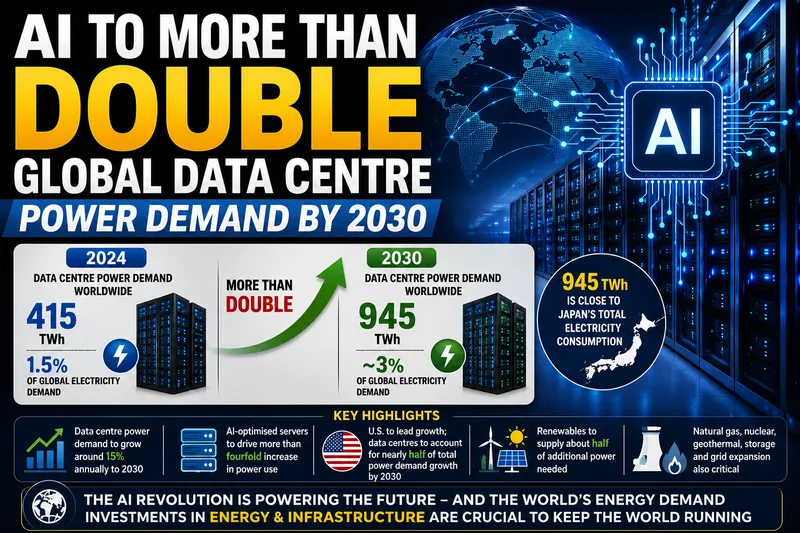
PARIS (special crosspondent) – The rapid growth of artificial intelligence is set to drive a dramatic increase in global electricity consumption, with power demand from data centres expected to more than double by the end of the decade, according to the International Energy Agency (IEA).
Projected Electricity Consumption Trends
The agency projects that data centres worldwide will consume around 945 terawatt-hours (TWh) of electricity annually by 2030—almost equal to Japan’s current total electricity consumption. This surge will be fuelled primarily by the expanding use of AI systems, which require increasingly powerful computing infrastructure. The IEA estimates that global data centres used approximately 415 TWh of electricity in 2024, representing about 1.5 percent of global electricity demand. By 2030, that share is expected to rise to nearly 3 percent, making data centres one of the fastest-growing sources of electricity consumption.
The Role of AI in Energy Demand
AI-focused servers are expected to account for the largest share of the increase, with their electricity use forecast to grow more than fourfold over the next five years. Overall, electricity demand from data centres is projected to rise at an average annual rate of around 15 percent. Much like the analysis examines resilience of Iranian economy amidst ongoing global pressure, global energy markets are adapting to shifting consumption patterns. The United States is expected to lead the increase in electricity demand, followed by China. In the US, data centres are forecast to account for nearly half of the country’s total growth in electricity demand by 2030 and are expected to consume more power than several energy-intensive industries combined.
Energy Transition and Infrastructure Investment
The report says renewable energy is likely to supply about half of the additional electricity required, supported by investments in battery storage and electricity grids. Natural gas, nuclear power and emerging technologies, including geothermal energy, are also expected to play an important role in meeting future demand. While the rapid expansion of AI will place significant pressure on global electricity systems, the IEA says the technology also offers opportunities to improve energy efficiency, optimise power networks and accelerate scientific and industrial innovation. The agency emphasised that sustained investment in electricity generation and grid infrastructure will be essential to support the growing energy needs of the AI era, much like how Central Asia seeks trade corridors to Pakistani ports amid challenges, requiring similar long-term infrastructure commitment.