Netanyahu Rejects US Pressure for Military Withdrawal From Gaza Region
 By hanif sabir
Published: 27 Jul 2026
2 min read
By hanif sabir
Published: 27 Jul 2026
2 min read
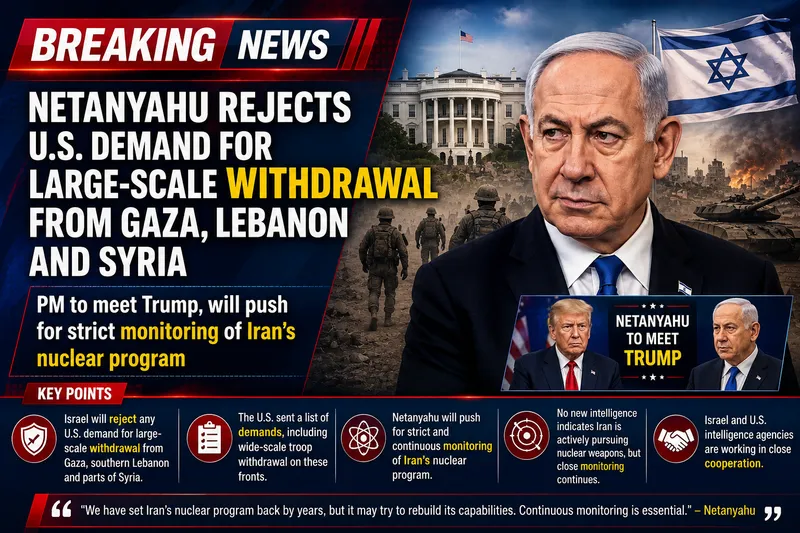
TEL AVIV (special crosspondent) – Israeli Prime Minister Benjamin Netanyahu has informed his security cabinet that he intends to reject any United States request for a large-scale withdrawal of Israeli forces from Gaza, southern Lebanon, and parts of Syria during his upcoming meeting with President Donald Trump. Netanyahu underscored that Israel would not compromise on matters concerning its core national security.
Stance on Military Withdrawal
According to reports in Israeli media, Netanyahu disclosed to the cabinet that Washington has submitted a list of proposals, which includes a formal request for a broad military withdrawal across Gaza, southern Lebanon, and specific sectors of Syria. The Prime Minister signaled his firm opposition to these terms, stating he will deliver a categorical refusal to the United States. This development follows a period of heightened diplomatic tension as both nations prepare for a high-level summit to address regional stability, including the ongoing war in Gaza and evolving geopolitical developments in Syria and Lebanon.
Focus on Iranian Nuclear Capabilities
During the briefing, Netanyahu emphasized that he would urge President Trump to maintain stringent and continuous monitoring of Iran’s nuclear programme. While acknowledging that there is currently no fresh intelligence suggesting Iran is actively attempting to reconstitute its nuclear weapons capability, he stressed that the possibility cannot be dismissed. The Prime Minister stated that Israeli and American intelligence agencies continue to maintain close cooperation, sharing data to ensure any efforts by Tehran to advance sensitive nuclear activities are detected and countered promptly.
Netanyahu claimed that previous strikes on Iranian facilities successfully delayed the program by several years. However, he warned that Tehran remains a persistent threat that could attempt to restore its capabilities, necessitating ongoing vigilance. He stated that while he looks forward to detailed discussions with President Trump, he recognizes that final US policy regarding Iran remains the prerogative of the President.
Strategic Implications for the Middle East
Analysts suggest that Netanyahu’s recent remarks underscore Israel’s commitment to maintaining a military presence in Gaza and southern Lebanon, which the administration views as vital to protecting its borders. As the region navigates complex security challenges, this stance on maintaining its defensive posture highlights why Israel continues to categorize Iran’s nuclear ambitions as its primary strategic threat. Observers note that the forthcoming meeting between the two leaders will likely have significant implications for the future security architecture of the Middle East.