Pakistan Army Vows Counter-Terrorism, Cites Afghan Territory Use
 By hanif sabir
Published: 06 Jul 2026
3 min read
By hanif sabir
Published: 06 Jul 2026
3 min read
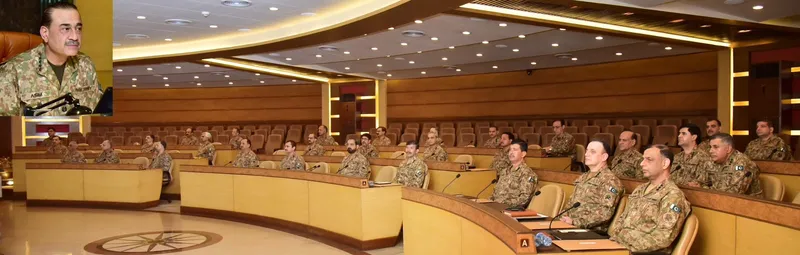
RAWALPINDI (special crosspondent) – Pakistan’s military leadership has reiterated its commitment to eliminating terrorism, expressing grave concern over what it says is the continued use of Afghan Taliban-controlled territory by India-backed militant groups to carry out attacks inside Pakistan. The message came during the 276th Corps Commanders’ Conference, chaired by Field Marshal Syed Asim Munir, Chief of Army Staff and Chief of Defence Forces, at the General Headquarters (GHQ), according to a statement issued by the Inter-Services Public Relations (ISPR).
Prayers for Martyrs and Security Review
The conference opened with prayers for the martyrs of the Armed Forces, law enforcement agencies and civilians, with the military leadership reaffirming that their sacrifices remain central to Pakistan’s security and national resilience. Participants also reviewed the country’s overall security environment and expressed confidence in the operational preparedness and combat readiness of the armed forces.
Allegations of India-Sponsored Militancy from Afghanistan
The forum alleged that India-sponsored militant outfits, including Fitna al Khawarij (FAK) and Fitna al Hindustan (FAH), are using areas under the control of the Afghan Taliban to plan and launch attacks against Pakistan. It maintained that the Afghan Taliban administration bears responsibility for preventing its territory from being used for cross-border terrorism. Reaffirming Pakistan’s right to self-defence, the military said intelligence-based operations under Operation Ghazab-lil-Haq would continue against terrorist networks operating from across the border.
Holistic Approach to Counter-Terrorism
The conference also stressed that military action alone is not enough, calling for stronger governance, improved public service delivery and effective administrative structures in conflict-affected regions to dismantle the links between terrorism, crime and political patronage.
Countering Hybrid Warfare and Disinformation
The participants warned that, following what the military described as Pakistan’s success in Marka-e-Haq, hostile elements have increasingly turned to hybrid warfare and disinformation campaigns to create instability. The forum vowed to counter all externally supported attempts to undermine Pakistan’s security.
Regional Diplomacy and Cooperation
On regional affairs, the commanders welcomed Pakistan’s diplomatic efforts aimed at promoting dialogue, reducing tensions and strengthening regional stability. They reaffirmed Islamabad’s commitment to peaceful dispute resolution, adherence to international law and cooperation with regional partners on shared security challenges. The forum also reviewed India’s recent statements regarding the Indus Waters Treaty, reaffirming Pakistan’s position as outlined by the National Security Committee on April 24, 2025. It pledged that all necessary measures would be taken to secure Pakistan’s legitimate share of water resources.
Kashmir Dispute and Human Rights Concerns
Discussing Kashmir, the military leadership condemned alleged human rights violations and demographic changes in Indian Illegally Occupied Jammu and Kashmir (IIOJK). It reiterated Pakistan’s longstanding diplomatic, political and moral support for the Kashmiri people, stating that lasting peace in South Asia depends on the implementation of UN Security Council resolutions granting Kashmiris their right to self-determination.
Future Preparedness and Transformation
Concluding the conference, Field Marshal Asim Munir directed commanders to accelerate the armed forces’ multi-domain transformation programme and maintain the highest standards of vigilance, operational readiness and professionalism to effectively respond to conventional, sub-conventional and hybrid threats while protecting Pakistan’s sovereignty and national interests.