United States Imposes New Import Tariffs on Sixty Trading Partners
 By hanif sabir
Published: 24 Jul 2026
3 min read
By hanif sabir
Published: 24 Jul 2026
3 min read
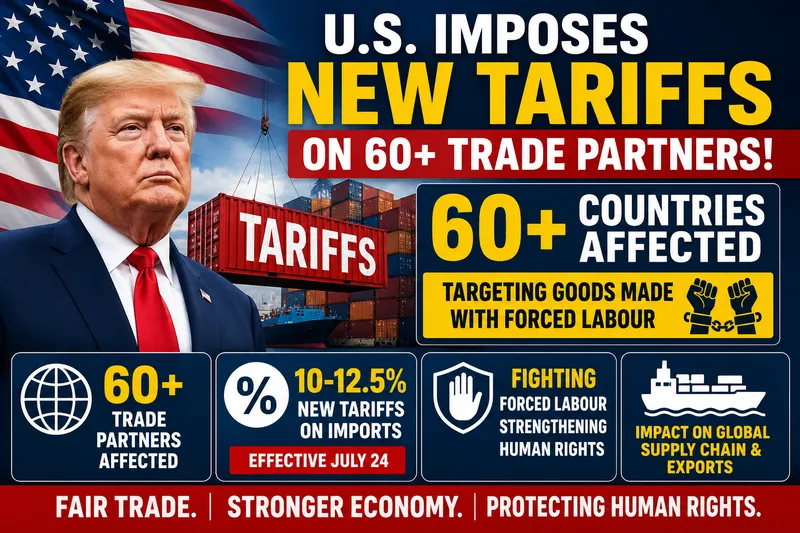
WASHINGTON (special crosspondent) – The United States has significantly expanded its trade measures by imposing new import tariffs on more than 60 trading partner countries, marking one of the broadest tariff actions of the Trump administration. The move is aimed at blocking goods allegedly produced through forced labour while protecting American industries and strengthening supply chain security.
Global Scope of New Tariff Measures
According to reports by international media, the new tariffs range from 10% to 12.5% and came into effect on July 24. The measures target a wide range of imported products from countries that, according to U.S. authorities, have not taken sufficient action to eliminate forced labour from their supply chains. The White House maintains that this policy is intended to uphold human rights, promote fair trade, and reduce dependence on imports from countries accused of unfair labour practices. U.S. officials argue that American consumers should not indirectly support products manufactured under exploitative conditions, a sentiment that resonates with broader efforts to protect domestic markets similar to the Finance Minister Muhammad Aurangzeb’s recent engagements regarding international economic cooperation.
Impacted Nations and Sectoral Exemptions
Countries affected include China, the European Union, India, Canada, Mexico, Japan, South Korea, Brazil, Vietnam, Thailand, Malaysia, Indonesia, Turkey, the United Kingdom, Australia, and several other major U.S. trading partners. While many industrial and consumer goods will face the additional duties, certain strategic imports—including crude oil, natural gas, selected minerals, fertilizers, steel, and aluminium products—have been granted exemptions to avoid disruptions in key sectors. The administration has indicated that additional measures could follow if countries fail to address labour rights concerns, potentially impacting global industrial output as seen in other sectors like the pharmaceutical trade partnerships.
International Response and Market Outlook
The move has drawn criticism from several affected countries. China, the European Union, and other trading partners have expressed concern that the unilateral tariffs could undermine the global trading system and violate the principles of the World Trade Organization (WTO). Some governments are now considering legal challenges and potential retaliatory measures. Trade analysts warn that the expanded tariffs could increase production costs, disrupt global supply chains, slow international trade, and put upward pressure on consumer prices worldwide. Export-oriented industries—including textiles, electronics, automotive components, machinery, and renewable energy equipment—are expected to be among the sectors most affected. Economists believe the latest U.S. tariff package signals a new phase in global trade tensions, with far-reaching implications for international commerce, investment flows, and economic relations between the United States and its major trading partners, much like the diplomatic sensitivities often discussed during regional security consultations.