The World Has Changed: The Era of Coercive Power Is Dying
 By hanif sabir
Published: 28 Aug 2026
8 min read
By hanif sabir
Published: 28 Aug 2026
8 min read
The World Has Changed: The Era of Coercive Power Is Dying
Hanif Sabir
In a recent important interview with the renowned media group Financial Times, United Nations Secretary-General António Guterres drew attention to the changing realities of global politics. He argued that the world has changed and that major powers must accept the reality that they can no longer impose their will on other countries simply through the use or threat of power. On the surface, this may appear to be a diplomatic observation, but viewed against the backdrop of current global developments, Guterres’s assessment reflects one of the most significant transformations taking place in the political, military and economic order of the world.
After the end of the Cold War, the United States was widely regarded as the world’s sole decisive superpower. American military superiority, advanced technology, the global dominance of the dollar, economic strength, influence over international financial institutions and an extensive network of alliances gave Washington extraordinary power. For a considerable period, it appeared that the United States could impose its preferred political and security outcomes in almost any region of the world.
But the experiences of Iraq, Afghanistan, Syria, Ukraine and now Iran have demonstrated that possessing the world’s most powerful military and achieving the desired political outcome are two entirely different things.
The war against Iran is the latest example of this reality. The United States entered the conflict with major objectives, including limiting or eliminating Iran’s nuclear capabilities, missile programme and military influence across the region. Yet after months of war, Washington has failed to achieve all of its fundamental political objectives. Iran has undoubtedly suffered severe military and economic damage. Its facilities have been targeted and pressure on its economy has intensified. Nevertheless, the Iranian state remains intact, its people have remained resilient, and Tehran has retained its capacity for resistance.
This is the fundamental point that needs to be understood. Inflicting severe damage on a country and forcing it to accept your political terms are not the same thing. The United States possesses the ability to inflict enormous destruction on Iran. But the real question is whether Washington has succeeded in forcing Tehran to politically surrender on American terms. If the answer is not an unequivocal yes, then it represents a clear demonstration of the limits of great-power coercion.
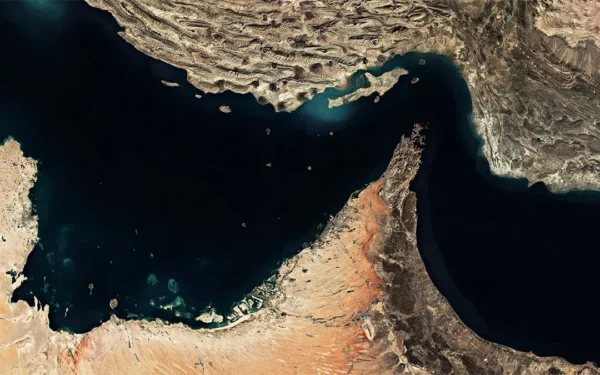
The Strait of Hormuz has emerged as another critical factor in the Iranian conflict. This strategically vital waterway, through which a significant share of the world’s energy supplies passes, has demonstrated that geography can still constrain even the greatest military powers. A relatively narrow geographical corridor has the ability to disrupt global trade, energy markets and international economic activity. That is a reality no superpower can afford to ignore.
The Russia-Ukraine war presents another major challenge to the traditional understanding of great-power strength. When Russia launched its full-scale invasion of Ukraine in 2022, many believed that Moscow’s overwhelming military superiority would allow it to capture Kyiv quickly and defeat the Ukrainian government. Instead, the war dragged on.
Ukraine’s state survived. Its government remained in place. Western political, financial and military support continued. Russia captured substantial territories and achieved significant battlefield gains, but Moscow failed to achieve all of its declared political and military objectives.
That is the real significance of the war. A major nuclear power may possess the ability to inflict enormous destruction on a neighbouring country, but that does not automatically give it the ability to reshape that country completely according to its own wishes.
This does not amount to Russia’s complete defeat. It does, however, demonstrate that in modern warfare there is a widening gap between military superiority and political victory.
The 2025 military confrontation between Pakistan and India in South Asia is another important example of this changing reality.
India is several times larger than Pakistan in terms of population, economy, defence expenditure and overall resources. It possesses advanced Western and Russian military systems and its diplomatic influence has expanded considerably on the international stage.
Yet India failed to use its numerical and economic superiority to decisively force Pakistan into accepting its terms. The two countries engaged in intense aerial and missile exchanges before a ceasefire was reached. Whatever interpretation one may attach to the confrontation, it demonstrated one important reality: a larger economy, a larger military and sophisticated weapons systems do not automatically guarantee that a state can impose its will on a smaller rival.
For Pakistan, the episode was particularly significant because it challenged several long-standing assumptions about the balance of power in South Asia. India possessed greater resources, but Pakistan mounted military resistance and prevented the confrontation from reaching a point where New Delhi could simply dictate the outcome.
Calling it a historic Pakistani victory is a political interpretation. But it is certainly reasonable to argue that the confrontation dealt a serious blow to the perception of India’s unquestionable military superiority. It also demonstrated that in modern warfare, smaller and middle-sized states can prevent a much larger power from achieving its objectives if they possess adequate defensive capabilities, national resolve, geographical advantages and effective strategy.
Now consider the Gulf states.
Over the past two decades, countries such as Saudi Arabia, the United Arab Emirates and Qatar have transformed their enormous financial wealth into modern infrastructure, global investments, futuristic cities, skyscrapers, sophisticated defence systems and international business centres. Dubai, Abu Dhabi, Doha and Riyadh have emerged as major economic hubs.
But war has also demonstrated that wealth and power are not the same thing.
Even with billions and trillions of dollars in financial assets, advanced aircraft, sophisticated missile-defence systems and some of the most expensive military equipment in the world, the Gulf states have not been able to completely insulate themselves from the consequences of regional conflict. Attacks affecting energy infrastructure have raised a fundamental question: does economic wealth automatically translate into strategic autonomy?
Qatar provides a particularly striking example. One of the world’s major LNG exporters, Qatar saw its gas infrastructure and export system affected by the conflict. Disruption around the Strait of Hormuz severely threatened its energy exports and raised a broader question for global markets: if a relatively narrow strategic waterway remains disrupted for an extended period, how resilient are even the world’s wealthiest economies?
This brings us to a fundamental distinction.
Wealth can make a country rich, but it does not necessarily make it powerful. A state may possess some of the world’s finest cities, enormous sovereign wealth funds, billions of dollars in financial assets and highly sophisticated weapons systems. But if its fundamental security decisions remain dependent on another power, its economic strength cannot automatically be converted into complete strategic power.
That is why the contemporary international system can no longer be understood simply through military strength or economic size.
Real power is a combination of many factors: national resolve, political stability, economic resilience, geography, technology, defence capability, diplomatic influence, public resilience and, above all, the ability to bear the cost of defending national interests during a crisis.
This is why the world is increasingly moving towards a multipolar order.
The United States remains one of the world’s most powerful states. China has emerged as a global economic, industrial and technological giant. Russia retains formidable military capabilities. India is a rapidly rising power. Iran has demonstrated that even a middle-ranking state can create an extremely complicated strategic challenge for a major power through geography, missile capabilities, political resilience and asymmetric warfare.
Pakistan’s position should also be viewed in this context.
Pakistan does not possess the economic scale of India or the major global powers. But it has strategic geography, nuclear capability, extensive defence experience, a strong national-security doctrine and an important position at the crossroads of South Asia, Central Asia and the Middle East. These factors make it difficult to assess Pakistan’s strategic weight simply through economic statistics.
Guterres’s message is therefore not merely a warning to the United States, Russia or any particular country. It is a warning to the entire structure of global power.
Power has not disappeared from the world. But the monopoly over power is weakening.
No single country can now assume that its military strength, economic size or international influence will automatically allow it to determine the outcome of every crisis according to its own wishes.
Iran has demonstrated this to the United States. Ukraine has demonstrated it to Russia. Pakistan’s confrontation with India has challenged traditional assumptions about overwhelming military superiority. And the Gulf states have experienced how even enormous financial wealth cannot completely protect a country from geographical and strategic vulnerabilities.
This is perhaps the central lesson of twenty-first-century international politics: power is no longer simply a question of how many aircraft, missiles, dollars or soldiers a country possesses.
The real question is how effectively a state can use its power in a crisis, how much resistance its adversary can mount, and how much political, economic and strategic cost it is prepared to bear in pursuit of its objectives.
Perhaps, therefore, the most important question of the coming years will not be which country is the most powerful.
It will be which country understands the limits of its own power most clearly.
The world has changed.
Power still exists, but the era of coercive power is dying.